Life Tips & Miscellaneous Travel and History Zen Philosophy and History Art and Sport Navigation of this blog
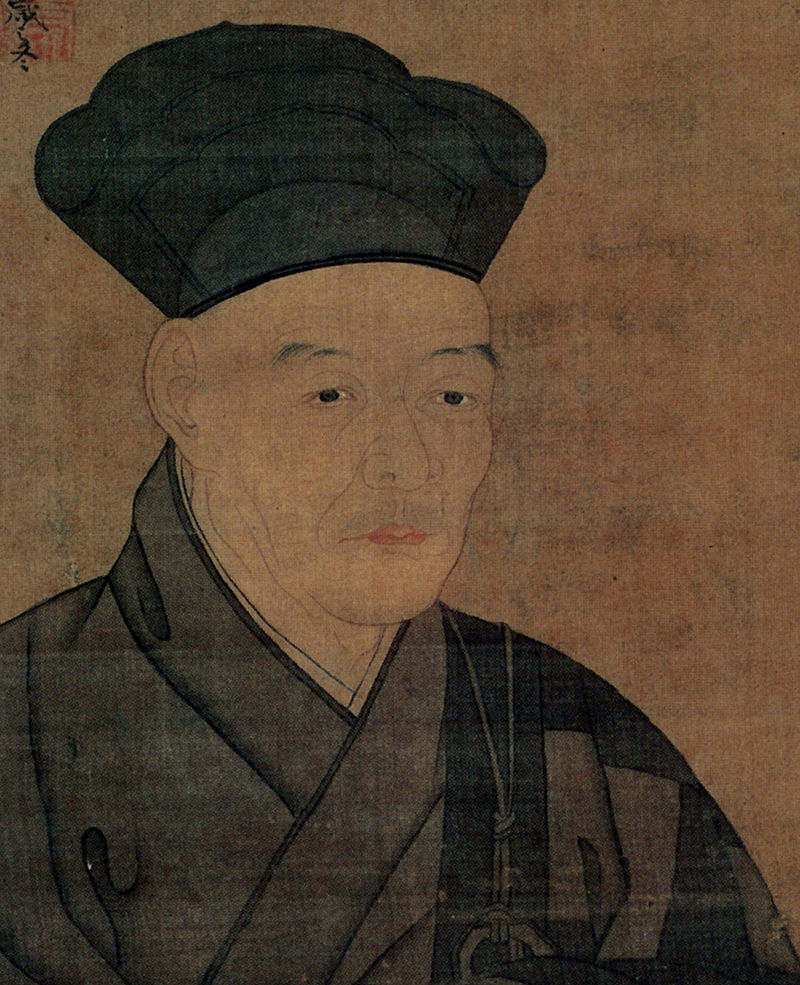
Sesshu
Sesshu was an ink painter active in the Muromachi period (late 1400s), about 600 years ago. One of his famous episodes is that when he was sent to a temple as a child and tied to a post as punishment for misbehavior, he used his tears to draw a mouse that looked as if it were alive. He used his tears to draw a picture of a living mouse with his feet. He was also a Zen monk who trained at Shokokuji Temple in Kyoto, which is mentioned in the book, “Strolling Along the Street: Famous Temples of Kyoto and Daitokuji Temple – Dada, Zen, and Ikkyu.

As previously mentioned in “The Beauty of Fluctuation: Japanese Paintings and Japanese Calligraphy” Japanese paintings before the Kamakura period (1185-1333) were based on Japanese scenes and stories, called “Yamato-e.” After the Kamakura period, however, a new religion (Zen Buddhism) was imported from China, as described in “History of Zen, Temples and Kamakura (Rinzai Zen and Kamakura Gozan). Zen Buddhism was associated with art forms such as painting and calligraphy, as described in “Zen and Art” and paintings using shades of ink, called suiboku-ga (ink painting), were imported.


Sesshu traveled to China (1468) on a Ming Dynasty ship sent by the Ouchi clan of Yamaguchi, as described in “Kaido yuku – Choshu Road“, and had the opportunity to experience the authentic Suiboku-ga (ink and wash painting) for two years. After returning to Yamaguchi, he is said to have perfected the Japanese style of ink painting, which was modeled after Chinese painting.
His most famous work is “Landscapes of the Four Seasons.

He is also said to have painted Amanohashidate in his 80s, the last years of his life, while standing on the Kurita Peninsula (present-day Kyoto Prefecture) where Amanohashidate can actually be seen.

There are also paintings such as Huikai Danjie, depicting Master Daruma, the founder of the Chinese Zen sect.

The characteristics of his paintings are, as seen in Amanohashidate, changing the composition of the actual landscape to achieve compositional balance, ignoring the rules of perspective (drawing the foreground in detail and blurring the background in the distance) and clearly depicting the subject of most interest in the bargain, or drawing the silhouette of a daruma with uniform lines like a marker as seen in Huikanaiwa-zu. He paints in an “anything goes” style, drawing the silhouette of Daruma with uniform lines like a marker, as seen in the Huikai Danbo-zu.
“Anything Goes” in Western Art
This “anything goes” approach is a reflection of the realist painting style of Jean-François Millet in the world of Western art, as well as of the “anything goes” approach in the art of the American artist.

The paintings were created with a different approach from the conventional approach called impressionism, including accurate depiction of changes in the quality of light depending on space and time, the everyday nature of the objects depicted, inclusion of movement as an essential element of human perception and experience, and innovative drawing angles.

He also took a different approach from painting, which is to copy a concrete object, called abstractionism, as described in “The Common Beauty of Art and Programming“.

Finally, instead of meticulously applying pigments to paper or canvas, they dripped, splattered, or smeared them, an approach that can also be seen in the process of becoming what is called action painting or informel, in which the action of painting itself becomes expressed art, rather than a concrete object being painted.

Sesshu and Freedom
By actually engaging in this kind of “anything goes” practice, or to put it another way, “no rules,” rather than thinking only in the head, various values are brought to light, hidden truths are revealed, and this leads to a new trend in art.
This “anything goes” approach applied to a solid genre such as natural science is quantum mechanics as described in “Quantum Mechanics, Artificial Intelligence, and Natural Language Processing” and applied to the world of mathematics is the “possible worlds” and probability theory described in “The Possible Worlds, Logic, Probability, and Artificial Intelligence“.
As stated in “The Possible World and Probability Theory” the Zen teaching states that “one’s potential, which is manifested through various connections, is really infinite, and to judge whether one can or cannot do something before trying it is to underestimate one’s own potential. As stated in “Cold, Warm, and Self-Knowledge” Zen also teaches that “it is important not to think in terms of petty theories, but to act and experience for oneself.
Thus, in the world of Zen, it is recommended to recognize not only existing perspectives but also infinite possibilities, and to move oneself in order to see them. As a Zen monk, Sesshu’s “anything goes” stance can be thought of as derived from this Zen philosophy.
Today, the word “freedom” is primarily interpreted as a translation of the words “Liberty” (unrestricted or exempt) and “Freedom” (liberty from oppression and bondage or freedom won), which were imported during the Meiji era and originated in the Christian faith. The word “freedom” in the Buddhist word “freedom” means to be free from attachment, as in “freedom comes from oneself”.
As mentioned above, it is said that Sesshû painted Amanohashidate when he was in his 80s, and we can see from his works that he lived his life freely and energetically.
Reference
Specialist Books Focused on Sesshū
Sesshū: Master of Ink and Brush – 500th Anniversary Catalogue
A comprehensive art catalogue commemorating the 500th anniversary of Sesshū Tōyō (the Japanese Zen monk and painter). This volume includes high-quality reproductions of Sesshū’s works alongside English essays on his artistic style, iconography, and historical context. It is ideal for both art historians and students of East Asian painting.
Sesshū Tōyō and the Sino-Japanese Artistic Exchange
This scholarly publication examines Sesshū’s travel to Ming China, his study of Chinese literati and landscape painting, and how that experience shaped his approach to ink painting. It situates Sesshū within broader artistic networks between China and Japan and is excellent for understanding the cross-cultural influences in Muromachi period art.
English Reference Books on Japanese Ink Painting and Muromachi Art
Zen Buddhist Landscape Arts of Early Muromachi Japan (1336–1573) — Joseph D. Parker
A detailed art historical study that places Sesshū and his contemporaries in the context of Zen Buddhist visual culture. It covers the development of landscape painting (suibokuga), the poetic-pictorial tradition of shigajiku (poem-and-image scrolls), and how these practices reflect Zen aesthetics.
Bridge of Dreams: The Mary Griggs Burke Collection of Japanese Art — Miyeko Murase
An English-language collection catalogue of Japanese art from one of the most important Western collections. Although broader in scope, this book situates Sesshū’s painting within the larger history of Japanese visual art, helping readers understand his place in the canon. (General reference; widely held in academic libraries.)
The Heibonsha Survey of Japanese Art
A multi-volume survey of Japanese art history that includes sections on suibokuga and Muromachi period painting. This English edition is useful for anyone seeking a broad chronological overview with scholarly essays and illustrations. (Typically found in university collections.)
Related Books on Zen, Aesthetics, and Cultural Context
Zen and Japanese Culture — D. T. Suzuki
A classic English work by one of the foremost interpreters of Zen for Western audiences. While not about Sesshū specifically, this book explores Zen philosophy and its influence on Japanese arts, including ink painting and calligraphy, offering valuable context for understanding Sesshū’s artistic worldview.
The Book of Tea — Okakura Kakuzō
Originally written in English, this influential essay links Zen, Taoism, and Japanese aesthetic values such as simplicity, harmony, and wabi-sabi. It provides cultural background on the mindset that informed painters like Sesshū.
Painting and Experience in Fifteenth-Century Japan — Oliver Statler
An art historical study that examines painting practices and visual culture in Japan during Sesshū’s lifetime. It discusses how artists engaged with social, religious, and aesthetic traditions in the 1400s, giving deeper insight into the world that produced Sesshū’s work.

Chinoba
Intelligence as Relationship
Research Platform
founded by
Masao Watanabe
AI Systems Architecture
Decision Trace
Human–AI Coordination
Algorithmic Governance
Related Research
This topic is part of the Chinoba Knowledge Base.

コメント