
Knowledge Base Archive
This article is part of the Chinoba Knowledge Base.
Explore Chinoba.org →
Miscellaneous Machine Learning Digital Transformation Artificial Intelligence Technology Miscellaneous Navigation of this blog
Challenges with existing lithium-ion batteries.
Lithium-ion batteries used in electric vehicles and other applications are an important energy storage technology used in a wide range of applications, but they face a number of challenges, including accelerated degradation at high temperatures, overcharging and deep discharge, risk of ignition and explosion due to overcharging and short circuits, limited energy density, environmental impact and cost. In response to these issues, approaches such as those described in ‘Bipolar lithium-ion iron phosphate batteries’ have been taken. In this article, we will discuss solid-state battery technology, which can improve safety and energy density through the use of solid electrolytes.What is an all-solid-state battery?
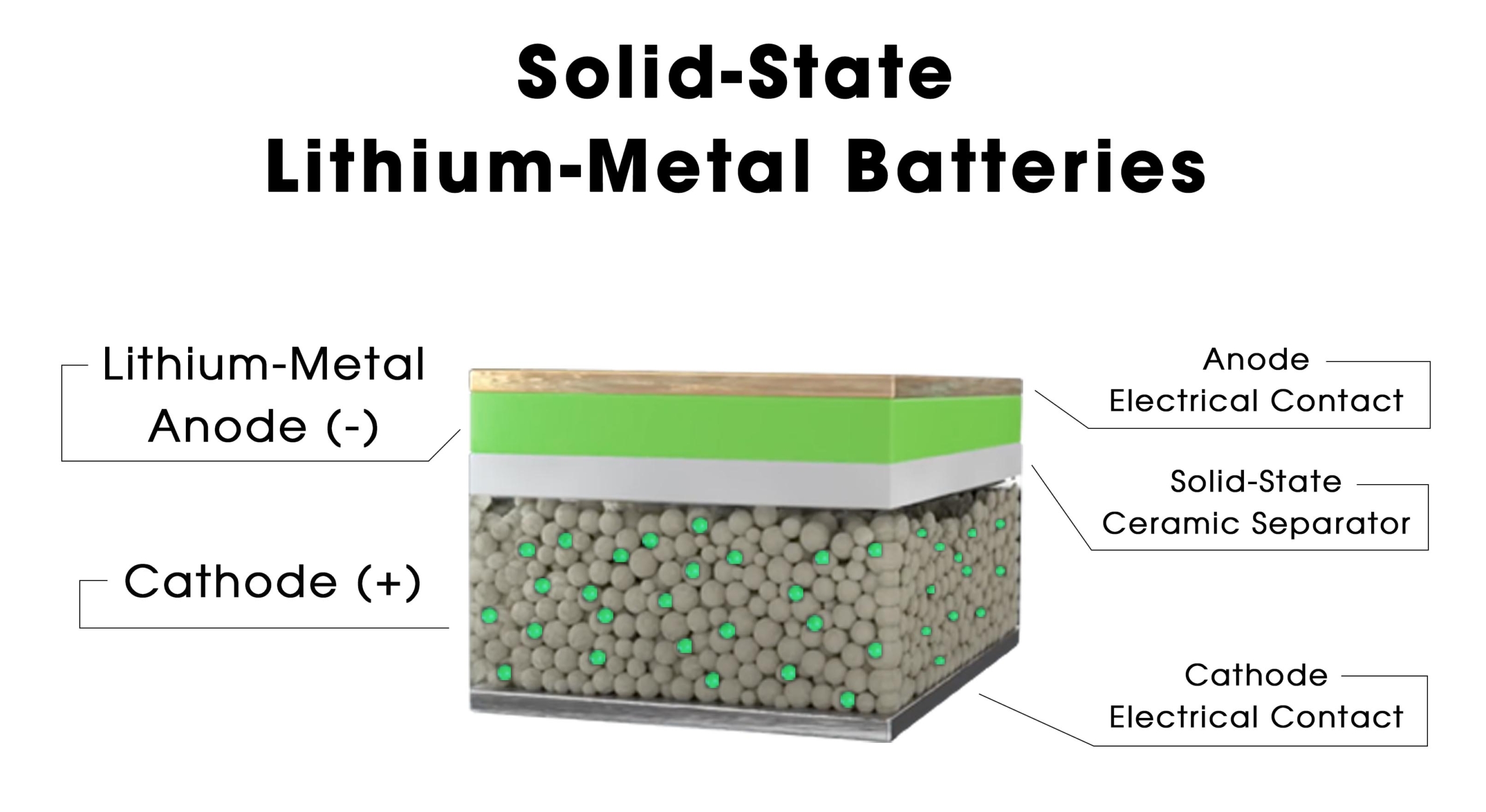
All-solid-state batteries are rechargeable batteries that use a solid electrolyte instead of the liquid electrolyte used in conventional lithium-ion batteries and consist of a ‘positive electrode’ containing lithium and oxides, a ‘solid electrolyte’ which is a solid material that conducts ions, and a ‘negative electrode’ made of lithium metal or graphite that improves energy density. The ‘anode’ is made of lithium metal or graphite and serves to increase the energy density.

Combined with AI technology
The combination of all-solid-state batteries and AI technologies has important potential in optimising next-generation energy systems and battery management. In particular, AI technologies could make a significant contribution to improving and optimising the performance of all-solid-state batteries in the R&D and manufacturing processes as well as in the operational phase, including 1. all-solid-state battery material discovery and design: the discovery of new materials and optimisation of material composition are important in the development of all-solid-state batteries, and AI techniques, in particular machine learning (ML) and deep learning (DL), can be used to approach the following- Accelerated materials simulation: AI can be used to predict the physical and chemical properties of materials, thereby enabling rapid screening of new solid electrolyte and electrode materials and finding material candidates with superior performance.
- Data-driven materials design: based on vast amounts of experimental and simulation data, AI suggests the best material combinations and process parameters for all-solid-state batteries. Compared to conventional trial-and-error approaches, materials can be developed more efficiently.
- Automatic optimisation of process parameters: AI can monitor and optimise process parameters such as temperature, pressure and time on the production line in real time. This improves product uniformity and increases manufacturing efficiency.
- Defect detection and quality control: image recognition technology using AI and sensor-based data analysis can automatically detect defects and anomalies that occur during the production of all-solid-state batteries. This will minimise the number of defective products on the production line.
- Improved battery modelling: all-solid-state batteries, unlike conventional lithium-ion batteries, require complex modelling due to different solid electrolyte properties and ion transfer behaviour; AI accurately models these complex physical phenomena and enables prediction of battery degradation and performance changes.
- Faster simulation: AI-based models can be computed faster than traditional physics-based simulations, enabling real-time battery performance prediction.
- Optimisation of charge and discharge cycles: AI maximises battery life by analysing battery status in real time and providing optimal charge and discharge schedules; AI can monitor the status of individual battery cells and adjust charging speed and voltage accordingly.
- Anomaly detection and predictive maintenance: the AI monitors battery data and detects early signs of abnormal behaviour or degradation. This enables preventive action to be taken before a failure occurs.
- Performance prediction model building: based on past experimental and operational data, AI builds a battery performance prediction model to predict performance degradation and lifespan during operation.
- Real-time optimisation: the AI analyses battery usage in real-time and suggests optimal operating conditions. This enables the battery to be operated at maximum efficiency, maximising energy density and lifetime.
- The benefits of integrating all-solid-state batteries and AI technology include: the use of AI will accelerate the design of materials and process development for all-solid-state batteries, which will increase the speed of research and development ‘speed of development’; optimising the manufacturing process using AI will reduce manufacturing costs and increase the commercialisation of all-solid-state batteries ‘manufacturing cost Reduction in manufacturing costs’, and “Improvement in battery performance”, where AI-based battery management and performance prediction will enable efficient operation of all-solid-state batteries, maximising battery life and energy density.
reference book
Topics related to the application of all-solid-state batteries and AI technologies are of increasing importance in areas such as materials development, process optimisation, simulation and performance prediction. Reference books on these topics are described below. Reference books on all-solid-state batteries 1. “Solid State Electrochemistry” by Peter G. Bruce -Explains the basic principles and applications of solid-state electrolytes, including all-solid-state batteries. Suitable for learning the basics of solid-state ionic conduction and battery materials. 2. “Solid State Batteries: Materials Design and Optimization” by Daniel H. Doughty This book focuses on the design and optimisation of all-solid-state batteries. It provides a wealth of information on material selection and process technology. 3. “Handbook of Solid State Batteries” by Dudney, West, and Nanda Covers a wide range of all-solid-state batteries, from materials science to device design and manufacturing techniques. Recommended reading for researchers and engineers. 4. “Lithium Batteries: Advanced Technologies and Applications” by Bruno Scrosati, Jürgen Garche, and Werner Tillmetz Covers technologies related to lithium-ion batteries in general. All-solid-state batteries topics are also included. Reference books on the application of AI technologies. 1. “AI for Materials Science” by Yuan Cheng and Mark D. McDonnell – Focuses on the application of AI to materials science, particularly in new materials discovery and property prediction. 2. “Machine Learning in Materials Science: Recent Progress and Emerging Applications” by Tanjin He and Shyue Ping Ong – Explains AI-based materials design and optimisation methods. The content is also applicable to materials development for all-solid-state batteries. 3. “Data-Driven Science and Engineering: Machine Learning, Dynamical Systems, and Control” by Steven L. Brunton and J. Nathan Kutz – Describes how AI can be used to control and simulate materials development processes. 4. “Deep Learning for the Physical Sciences: Accelerating Research with Machine Learning” by Joseph T. Foley et al. – Presents theory and practical examples of the application of AI technology to the physical sciences. Applicable to battery performance prediction and process simulation. Resources related to the intersection of all-solid-state batteries and AI. 1. “Artificial Intelligence for Accelerated Battery Design” 2. “Accelerated Atomistic Modeling of Solid-State Battery Materials With Machine Learning” 3. “Computational Materials Discovery” by Artem R. Oganov This book focuses on the use of computational science and AI to discover new materials. Applicable to all-solid-state battery research. Online courses and resources – Materials Project Provides databases and machine learning tools focused on materials science. Also applicable to materials design for all-solid-state batteries. Machine Learning for Materials Informatics

Chinoba
Intelligence as Relationship
Research Platform
founded by
Masao Watanabe
AI Systems Architecture
Decision Trace
Human–AI Coordination
Algorithmic Governance
Related Research
This topic is part of the Chinoba Knowledge Base.


コメント