🎥 The YouTube version is also available:
Enterprise AI Through Mathematical Induction | Beyond One-Shot Answers to Explainable Decisions
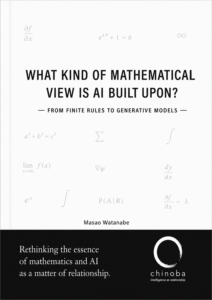
Books: What Kind of Mathematical Worldview Is AI Built Upon?: From Finite Rules to Generative Models

Mathematics has a way to handle propositions that appear complex through a remarkably simple idea.
It is called mathematical induction.
Suppose we want to prove that a statement holds for every natural number (n). We do not need to check every number one by one.
First, we verify that the statement holds in the initial case.
Next, we show that if it holds for a certain number (n), it also holds for the next number, (n+1).
Once these two conditions are established, the statement extends to all natural numbers.
The domino analogy makes this intuitive. If the first domino falls, and every domino is positioned so that it knocks over the next one, the entire sequence will eventually fall.
The important point is that we do not try to prove the final whole all at once.
We establish what can be verified in a small unit. We show what remains true as we move to the next stage. By accumulating these results, we can reason about the correctness of the whole.
What Do We Look At in Combinatorics and Graph Theory?
In combinatorics and graph theory, inductive thinking becomes even more practical.
For example, when we add one vertex to a graph, what changes? How many edges are added? Is connectivity preserved? Does a cycle emerge?
Or, when we remove a leaf vertex from a complex graph, can we reduce the problem to a smaller problem of the same kind?
What we are looking at here is not merely a proof technique that moves from (n) to (n+1).
It is a way of thinking that asks:
- What operation constructs the object?
- What increases through that operation, and what is preserved?
- How far can a complex structure be decomposed into smaller structures?
This perspective is also important when using generative AI in the enterprise.
Enterprise AI Tends to Solve Complex Decisions All at Once
When organizations introduce AI, it is tempting to ask it questions such as:
Should this request be approved?
Can we use this data under this contract?
Is this proposal appropriate for this customer?
Is this change ready to be deployed to production?
High-performance LLMs can provide fluent answers to these questions.
But an answer alone does not provide what enterprise operations require.
- Which policies or contract terms were used as evidence?
- Was the information used as evidence actually authorized for this user to access?
- Were any required conditions overlooked?
- If information is missing, what needs to be added before a decision can be made?
- If a rule changes, which decisions and permissions will be affected?
Enterprise AI does not need merely a plausible one-shot conclusion.
It needs an architecture that divides a decision into small, verifiable units and builds it up from evidence and conditions.
Designing Enterprise AI Inductively
Mathematical induction is not applied to enterprise AI in a literal sense. However, its underlying way of thinking is highly effective.
We create units that can be verified locally. As operations or changes occur, we check what must remain true. In this way, we construct the overall decision safely.
This approach can be organized into four implementation principles.
| Implementation principle | chinoba concept | Role in enterprise AI |
|---|---|---|
| Decompose knowledge and work into smaller units | Semantic Chunk | Defines the minimum unit and boundary of information that may be provided to AI |
| Make relationships and conditions explicit | Evidence Graph | Handles relationships among evidence, authority, entities, and rules |
| Preserve the decision process | Decision Trace | Makes it possible to audit what evidence and conditions were used in a decision |
| Check the impact of changes in advance | Ontology Blast-Radius Report | Visualizes the effects of changes in definitions and rules on classification, inference, and contradictions |
1. Decompose: Create Boundaries Around the Knowledge Provided to AI
Simply giving an AI a long document and instructing it to “answer based on this” creates problems not only for retrieval accuracy, but also for information governance.
Design documents, customer specifications, meeting records, and contracts each have their own access scope, usage purpose, contractual restrictions, and retention period.
A Semantic Chunk is not merely a technique for dividing a document into shorter pieces.
It is the minimum unit of knowledge used to control what information may be referenced, by whom, and for what purpose.
Business processes can be decomposed in the same way: into units such as “request,” “review,” “approval,” and “execution.” By making the object smaller, we can make the required conditions and responsibilities of each unit explicit.
2. Connect: Treat Evidence and Conditions as Relationships
Decomposition alone is not enough to make a decision.
Approving a request may require us to verify not only the request itself, but also the user’s authority, contractual conditions, applicable internal policies, approvers, and deadlines.
These are not simply a collection of documents. They are a network of relationships among evidence, entities, rules, and permissions.
An Evidence Graph makes those relationships explicit.
It can represent relationships such as: “this user may access this information,” “this contract restricts use in a particular region,” or “this request requires department-head approval,” each connected to its source.
Rather than rushing to a conclusion, AI can check whether the relationships required for a decision are actually present.
3. Build Up: Preserve the Decision Process, Not Only the Conclusion
We should not ask enterprise AI only one question: “Should this be approved?”
The questions that should come first are:
What evidence is required for this decision?
Is that evidence available for authorized reference?
Which conditions are still missing?
If the conditions are satisfied, under which rule does the action become permissible?
A Decision Trace preserves this process.
It records when a decision was made, who made it, what evidence was referenced, which conditions and rules were applied, and what conclusion was reached. This turns AI output into a decision record that can be reviewed, audited, and improved afterward.
Even when AI cannot answer “approved,” it can still provide substantial value.
If it can show that “contract conditions have not yet been verified,” “an approver has not been assigned,” or “the stated purpose exceeds the permitted scope of use,” it can help people move a decision forward safely.
4. See Change: Understand How a One-Line Change Affects the Whole
Enterprise rules, classifications, and permissions are not fixed.
A new policy may be introduced. Contract terms may change. The definition of an information category may be revised. The permitted purposes for AI use may be reconsidered.
Such changes may look like a one-line revision, yet they can have wide-ranging effects on classifications, inferences, permissions, and previous decisions.
An Ontology Blast-Radius Report makes these impacts visible before a change reaches production.
It can identify:
- Newly valid inferences
- Entities whose classification will change
- Knowledge whose access permissions will change
- Rules that may produce contradictions
- Decisions that require reconfirmation or re-approval
By checking these effects, enterprise AI does not become a black box that is fragile in the face of change.
What chinoba Aims to Provide
Inductive thinking teaches us that we do not have to grasp a complex whole all at once.
We can define small units, verify the conditions they require, ensure that those conditions remain protected through subsequent operations, and investigate how far the impact extends when change occurs.
Within chinoba, Semantic Chunk, Evidence Graph, Decision Trace, and Ontology Blast-Radius Report are the components that bring this way of thinking into enterprise AI operations.
chinoba is not an AI system for generating answers alone.
It is a foundation that connects knowledge, evidence, constraints, and change impact so that enterprises can construct decisions.
The question for enterprise AI is not only, “Can AI produce an answer?”
On what evidence and under what conditions does that answer stand?
Who can verify it?
What will be affected when change occurs?
An architecture that can answer these questions is what enables AI to move from experimentation into real enterprise operations.

Chinoba
Intelligence as Relationship
Research Platform
founded by
Masao Watanabe
AI Systems Architecture
Decision Trace
Human–AI Coordination
Algorithmic Governance
Related Research
This topic is part of the Chinoba Knowledge Base.

コメント