🎥 The YouTube version is also available:
Why Does Generative AI Seem to Emerge? Quantum Mechanics,Multi-Agent Systems, and Meaning Generation
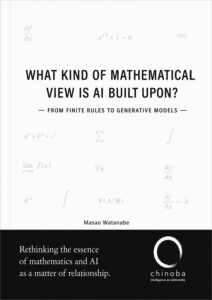
Books: What Kind of Mathematical Worldview Is AI Built Upon?: From Finite Rules to Generative Models

In modern physics, quantum mechanics is an extraordinarily mysterious theory.
An electron is observed as if it were a “particle,” yet at the same time it also behaves like a “wave.”
This “wave–particle duality” is widely known as one of the defining features of quantum mechanics.
But when we look at this structure from mathematical and philosophical perspectives, quantum mechanics appears to be more than merely a set of physical laws.
As discussed in “Transcendental Functions and AI — Why Generative AI Is Beginning to Go Beyond Finite Rules,” it can also be viewed as a theory that connects:
- a continuous world of transcendental functions, and
- a discrete, algebraic world.
Of course, this is not a strict definition in physics.
Yet from the perspectives of mathematics, information, philosophy, and AI, it offers a highly intriguing way of looking at things.
What Is the Algebraic World?
Classical mathematics and classical physics have sought to describe the world through:
- finite rules,
- clearly defined states,
- discrete values, and
- structures that can be determined.
For example:
- the position of an object,
- velocity,
- a switch being ON or OFF,
- logical values, and
- finite equations.
This is a highly “algebraic” world.
The world can be described in a fixed way through a finite set of symbols and rules.
Classical computers, too, fundamentally exist on top of this worldview.
In Quantum Mechanics, the Fundamental Entity Is the Wave
In quantum mechanics, however, the world cannot be described solely in terms of simple particles.
A quantum state is represented by a wave function:
[
\psi(x,t)
]
This wave function:
- extends across continuous space,
- possesses superposition,
- interferes, and
- behaves nonlocally.
Here, the world does not exist as a fixed point. Rather, it exists as a kind of spread or distribution.
Transcendental Functions Appear Everywhere in Quantum Mechanics
Of particular importance is the complex exponential function.
Euler’s formula is:
[
e^{i\theta} = \cos \theta + i\sin \theta
]
This single equation simultaneously expresses:
- waves,
- rotation,
- phase, and
- interference.
Complex exponential functions appear throughout quantum mechanics.
For example, the Schrödinger equation is:
[
i\hbar \frac{\partial \psi}{\partial t} = \hat{H}\psi
]
Its solutions typically take forms such as:
[
e^{-iEt/\hbar}
]
In other words, a quantum state essentially undergoes rotational motion as a wave.
Here, the world appears not as a finite, fixed structure, but as a continuously unfolding structure with potentially infinite expansion.
The World of Transcendental Functions and the Quantum World
Transcendental functions include:
- exponential functions,
- trigonometric functions, and
- logarithmic functions.
They have properties that cannot be fully enclosed within finite algebraic equations alone.
The exponential function, in particular,
[
e^x
]
can be expanded as the infinite series:
[
e^x = \sum_{n=0}^{\infty}\frac{x^n}{n!}
]
In this sense, transcendental functions can be viewed as:
structures that cannot be completely contained by finite rules alone, but continue to generate themselves.
The wave-like nature of quantum mechanics resonates strongly with this kind of transcendental structure.
Then What Is a Particle?
And yet, when we observe the world, we see “particles.”
An electron is observed as having a definite form:
- it is here,
- it has this value,
- it has this spin.
In other words, through observation:
- waves,
- continuity, and
- superposition
appear to be transformed into:
- particles,
- discrete values, and
- fixed states.
Is “Observation” a Projection from a Continuous World into a Discrete World?
This structure can be expressed intuitively as follows:
| Quantum state | Classical state |
|---|---|
| Wave | Particle |
| Continuous | Discrete |
| Transcendental-function-like | Algebraic |
| Superposition | Fixed state |
| Probability amplitude | Observed value |
From this perspective, quantum mechanics can be seen as a structure in which:
a continuous world with transcendental-function-like properties is projected, through observation, into a discrete algebraic world.
In Modern Physics, the Wave Is Increasingly the Fundamental Entity
What is even more interesting is that, in modern physics, the particle is no longer necessarily regarded as fundamental.
In quantum field theory:
- the field is fundamental, and
- particles are excitations of fields.
In other words, particles are simply:
local manifestations of waves.
From this viewpoint, the discrete world emerges as a local structure arising from a continuous world.
The Connection to AI: What Is “Transcendental-Function-Like AI”?
Taking this perspective further, generative AI can be viewed not merely as “very large software,” but as:
a system that generates discrete meanings and decisions from a continuous latent space.
This has a structural resemblance to the following relations in quantum mechanics:
- wave → particle,
- continuous → discrete,
- latent state → observed state.
Of course, AI is not a quantum computer.
Yet the structural analogy is highly interesting.
Conventional Software Belonged to the “Algebraic World”
Conventional software consists of:
- if statements,
- state transitions,
- finite rules,
- decision trees, and
- fixed algorithms.
It is a world in which:
a finite number of states are controlled by a finite number of rules.
This is highly algebraic.
For a given input, the system returns a predetermined output.
Its state space is finite, and in principle all patterns can be enumerated.
Classical AI was also, in essence, an extension of this worldview.
What Has Changed with Large-Scale AI?
With large language models, however, the situation has begun to change.
Inside a Transformer, the following operate in continuous spaces of thousands or tens of thousands of dimensions:
- vectors,
- attention weights,
- embeddings, and
- nonlinear transformations.
Here, meaning does not exist as a fixed symbol. Rather, it exists as:
relational position within a continuous space.
This is quite “wave-like.”
Latent Space Is Similar to a Field of Meaning
Consider the concept of “cat.”
It is not a single fixed symbol.
Depending on the context, it may evoke:
- a pet,
- an animal,
- comfort,
- a meme,
- a character, or
- Schrödinger’s cat in quantum mechanics.
Inside an LLM, these meanings do not exist as fixed definitions. They exist as:
probabilistic distributions within latent space.
Meaning itself therefore has a structure in which it:
- interferes,
- overlaps, and
- converges according to context.
This is quite similar to quantum “superposition.”
Inference Is Similar to Observation
Internally, an LLM holds a continuous probability distribution.
Yet it ultimately produces:
- words,
- tokens,
- sentences,
- code, and
- decisions.
That is:
discrete outcomes are generated from continuous latent states.
This can be seen through the following analogy:
| Quantum mechanics | Generative AI |
|---|---|
| Wave function | Latent vector |
| Superposition | Multiple possible meanings |
| Observation | Decoding |
| Particle | Output token |
Attention Is Similar to Wave Interference
The Attention mechanism in Transformers is especially interesting.
In Attention, each token affects the others.
Meaning is therefore not fixed; it changes within its relationship to the whole.
This resembles:
- wave interference,
- resonance, and
- phase-like interaction.
A Transformer can be seen less as a “symbol-manipulation machine” than as:
a resonance device for a field of meaning.
Why Does Emergence Occur?
The most important feature of large-scale AI is emergence.
Capabilities that did not exist in smaller models can appear suddenly once a certain scale is exceeded.
This has several characteristics:
- it is not explicitly programmed,
- it is difficult to explain through local rules alone, and
- the full state space cannot be enumerated.
AI is therefore changing from:
a collection of finite rules
into:
a system that continuously generates.
From Algebraic AI to Transcendental-Function-Like AI
| Conventional AI | Large-scale AI |
|---|---|
| Algebraic | Transcendental-function-like |
| Discrete | Continuous |
| Fixed rules | Generative |
| Explicit knowledge | Latent structure |
| State transitions | Wave-like change |
This can be read, in one sense, as a transition from algebraic AI to transcendental-function-like AI.
The Real Question in the Age of AI
What matters here is not simply:
“What does AI predict?”
The more important question is:
“Where do we discretize the world?”
In other words:
- Where does something become definite?
- Where do humans intervene?
- Where do we stop?
- Where do we take responsibility?
These questions are closely related to:
- the measurement problem,
- boundary conditions, and
- the problem of projection.
The Connection to the Decision Trace Model
This is where the idea of the Decision Trace Model becomes important.
Generative AI produces:
Signal — continuous latent states.
But the real world requires:
Decision — discrete commitments.
Between Signal and Decision, we need to design:
- Boundary,
- Human, and
- Trace.
In a sense, this means designing:
the measurement apparatus of AI.
Will AI Become a “Quantum Field of Meaning”?
In the future, AI may become more than a tool.
It may become a “field of meaning” spread across:
- organizations,
- people,
- agents,
- networks, and
- contexts.
At that point, what will matter is not:
“What did it predict?”
but rather:
“How did meaning converge, and where did it become a real-world decision?”
Conclusion
Quantum mechanics is not merely a theory of microscopic physics.
Within it, the following coexist:
- infinity and finitude,
- waves and particles,
- continuity and discreteness.
Modern AI, too, is moving closer to an existence that cannot be fully enclosed by finite rules, through:
- latent spaces,
- probability distributions,
- emergence, and
- nonlinear generation.
That is why what matters now may not be treating AI as a “prediction machine.”
Instead, the central challenge may be to design:
how real-world decisions are generated from a continuous world of meaning.

Chinoba
Intelligence as Relationship
Research Platform
founded by
Masao Watanabe
AI Systems Architecture
Decision Trace
Human–AI Coordination
Algorithmic Governance
Related Research
This topic is part of the Chinoba Knowledge Base.

コメント